Sell the work,
not the seat.
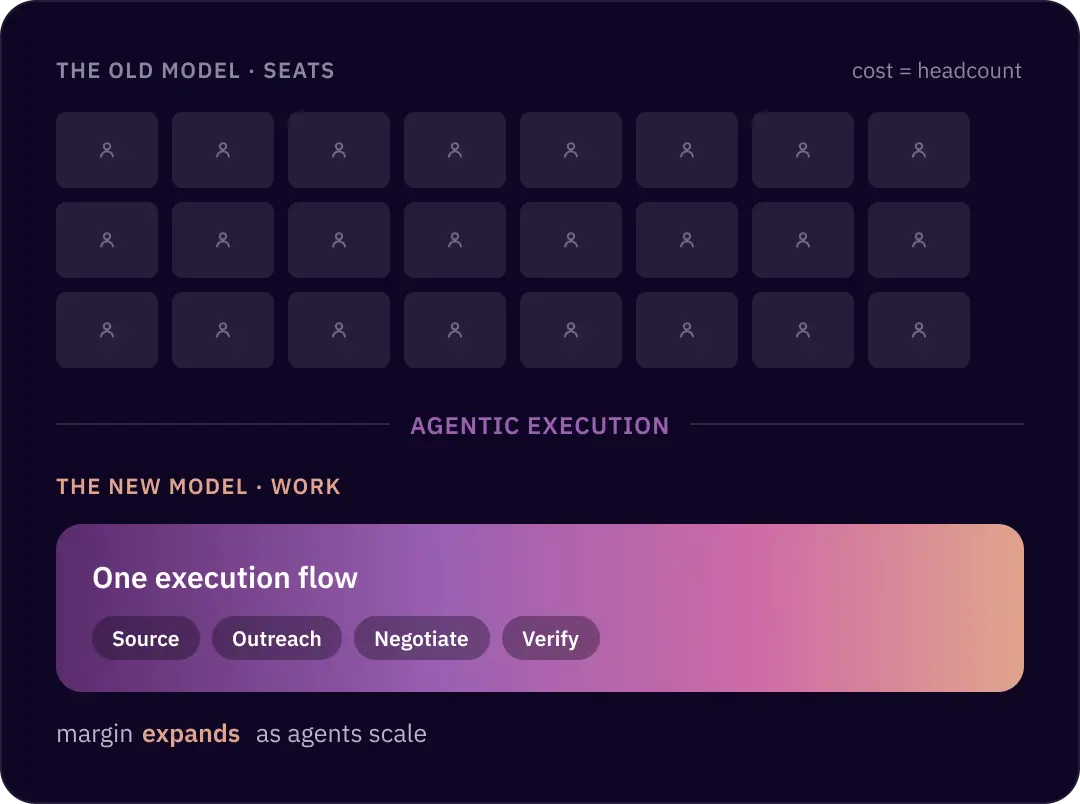
For twenty years the BPO pitch was simple: same work, lower cost, more seats. Agentic execution rewrites that math. Bundle Ellie and you keep the relationship you already own, at unit economics no staffing-only competitor can touch.
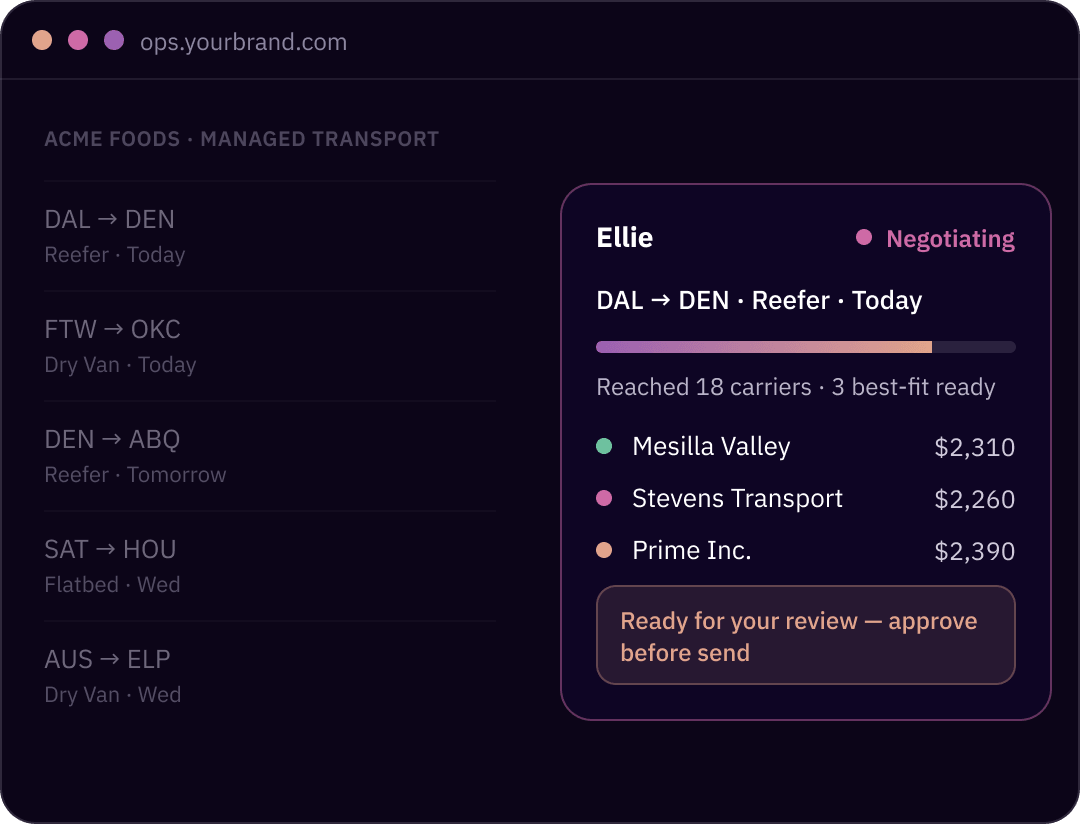
Sources capacity across your clients' TMS, load boards, and lists.
Runs outreach in parallel over email, SMS, and voice.
Negotiates inside each client's guardrails and shows the rate before it sends.
Verifies MC and DOT and safety automatically.
Tracks, follows up, and escalates exceptions to your team with context.
Agentic AI now lets brokerages bring low-cost execution in-house, which competes directly with the classic outsourcing offer. The BPOs that win do not fight that. They absorb it. Instead of staffing a desk to run the workflow, you run an execution layer and put your people on top of it, managing the agents, curating the edge cases, and owning the client outcome. You stop selling hours and start selling results.
“Pay people to manage the AI, not to do the data entry.”
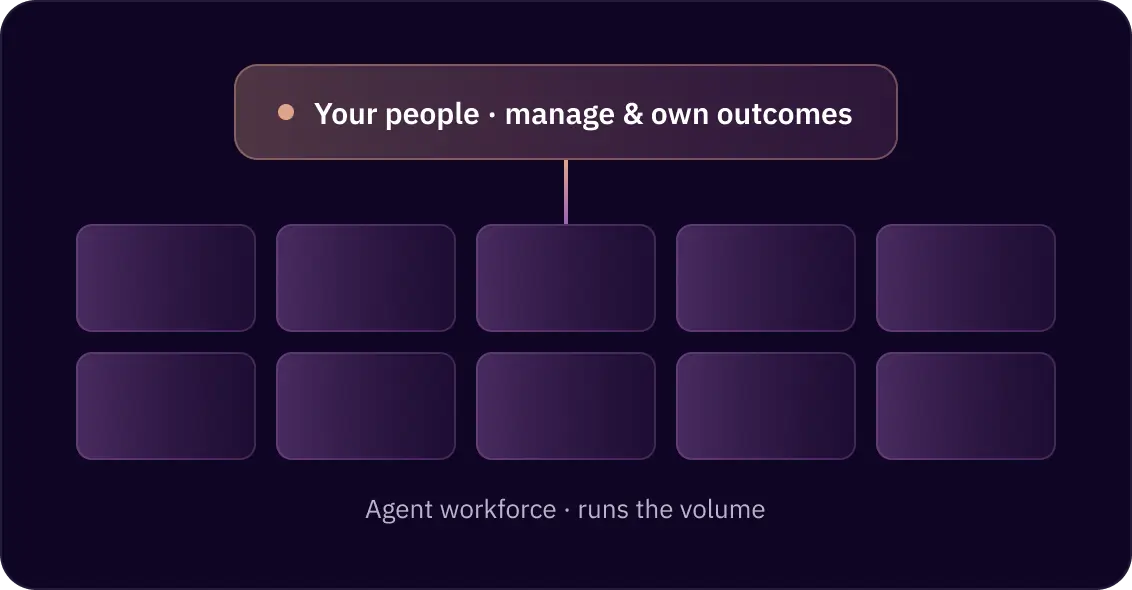
When execution runs at machine speed, the cost to serve drops and the ceiling on what you can offer rises. You can move from per-seat and per-hour pricing toward outcome-based contracts, backed by reporting no staffing-only BPO can produce: coverage rates, speed to cover, cost per load, and the financial impact of the work the agents ran. That report is a moat. It is also a renewal.
PER-SEAT PRICING
Bill the hours
•
Cost scales with headcount
•
Margin capped by labor arbitrage
•
Commoditized, easy to undercut
OUTCOME-BASED
Sell the result
•
Cost scales with headcount
•
Margin expands as agents scale
•
Reporting no staffing BPO can match
The freight BPOs that bundle agentic execution first will define what clients expect from the category, and they will compound a Carrier Context Graph per client that a late-moving competitor has to rebuild from scratch. The labor-arbitrage-only BPO is about to look expensive.
Can we run Ellie across multiple client accounts?
Yes. Ellie runs per account on top of each client's stack, and the Carrier Context Graph stays specific to that account.
Do our clients have to change their TMS?
asd
Does this cut our headcount?
asd