Run your freight in-house with
twenty people, not two hundred.
For forty years the math said don't: standing up a load control center meant hundreds of people and a multi-year TMS build. That math just flipped. The execution layer is why a lean internal team can now run procurement and execution at the scale you used to outsource.
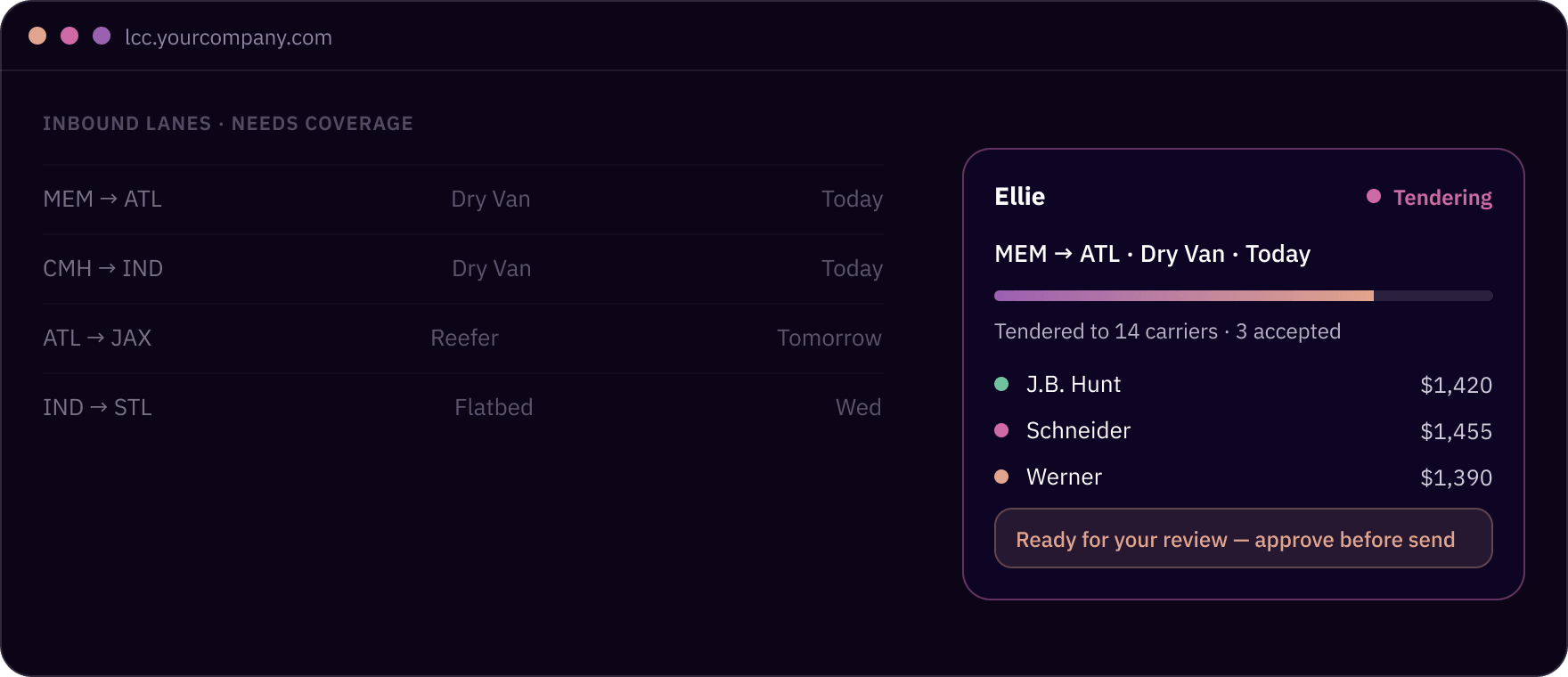
The cost to run carrier procurement in-house was always labor. The execution layer collapses that labor into a small team supervising agents that do the sourcing, outreach, negotiation, and tracking. The capability you used to rent from a 3PL becomes something your own people run, with full visibility and the margin staying inside the building.
“Amazon was the proof the math could work. The execution layer is the proof it can work without a $500B balance sheet.”

Five functions, all running on top of your existing systems, all reporting into one network you control.
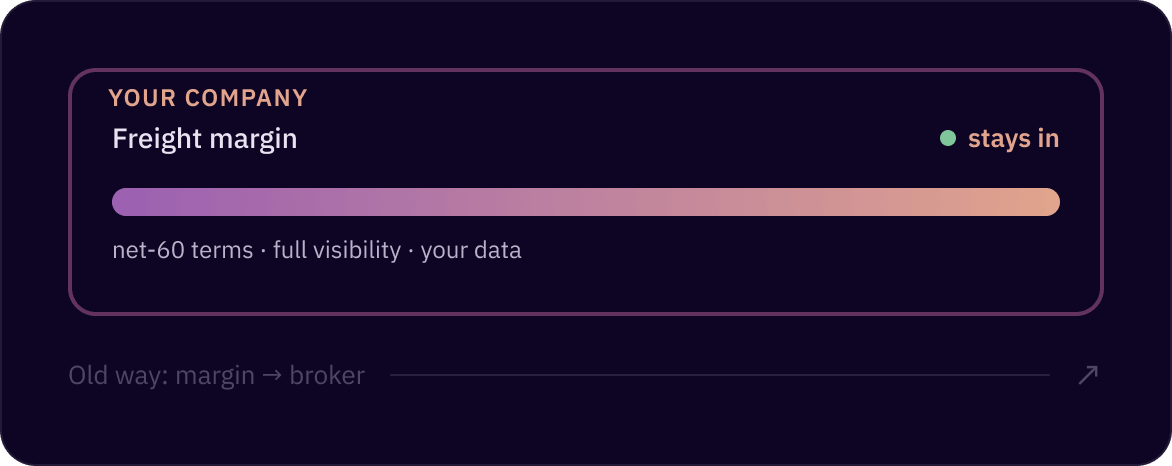
Every load you tender to a broker carries their margin out the door. Bring execution in-house and that margin stays inside your company, alongside the working-capital advantage of your own net-60 terms. For a Fortune 1000 shipper, the payback is measured in quarters, not years.
Why bring freight in-house now?
–
Because the cost was always labor, and the execution layer collapses that labor into a small supervising team. The barrier that made outsourcing the obvious choice is gone.
Don't we need a two-year TMS build?
+
asd
What happens to our existing planners?
+
asd